A garbage disposal hums but wont spin when its motor has power but the grinding parts cannot turn. A stuck object is a common cause, but an overload or damaged motor can also stop it. Turn the switch off right away. Follow the maker’s safety steps before checking anything beneath the sink.
Table of Contents
- Why does a garbage disposal hum but not spin?
- Is it safe to keep running a humming disposal?
- What should you check before trying to clear a jam?
- How can you safely free a jammed garbage disposal?
- How do you reset a garbage disposal that still will not spin?
- When should you call a plumber or electrician?
- How can you prevent a garbage disposal from humming and jamming?
Why does a garbage disposal hum but not spin?
A steady hum often means the motor has power, but the grinding plate cannot move. A jam is a common cause. The disposal may also have an overload, worn parts, or a failed motor. Switch the unit off as soon as you hear the hum.
What does the humming sound mean?
The sound comes from the motor trying to run. If the grinding plate is stuck, the motor cannot turn it. Letting the motor keep trying can make it overheat. A hum alone does not show which part has failed, so do not guess or take the unit apart.
A hard item in the chamber may have caused the jam. Bones, fruit pits, and small utensils can stop the plate. Food buildup may also block it. If the disposal stopped soon after something went down the drain, a jam is worth checking first.
What else can stop the disposal?
The reset button may trip after the unit gets too hot. In that case, the disposal may still fail to run after the jam is cleared. Worn motor parts or damaged wires can also cause trouble. Repeated humming, a burning smell, or a breaker that trips again calls for professional help.
The sink drain can be clogged even if the disposal motor works. That is a separate issue: the disposal may spin while water drains slowly. If the drain backs up, do not add more water or use harsh drain chemicals. Drain Cleaning may help when a blockage remains beyond the disposal.
Chino Valley Plumbing can help homeowners tell a jam from a failed unit. These checks can also help tenants and property owners explain what happened before service. Note any odd smell, leak, or breaker trip. Those details can help a plumber find the cause.
Is it safe to keep running a humming disposal?
No. Turn the switch off promptly, and do not keep trying to start the disposal. A stalled motor can heat up, and repeated attempts may harm the unit. Keep hands and tools out of the grinding chamber while the disposal has power.
Why should the switch be turned off?
A disposal grinds food, but testing a jam by reaching inside is not safe. The motor may start if someone turns on the wall switch. A loose object may also move once power returns. Treat the unit as unsafe until it is switched off and power is cut as the maker directs.
A humming disposal can draw power without moving. If the hum continues, switch it off instead of holding the switch down. Do not use the sink to test it while it is stuck. If the motor smells hot or you see smoke, keep clear and get help.
What safety steps matter before a check?
Read the unit’s instructions if you can find them. Some disposals plug into an outlet under the sink, while others are wired in place. If you are unsure how to cut power safely, do not open the cabinet or touch wires. Ask a qualified electrician or plumber to check it.
Keep water away from electrical parts. Do not pull a plug with wet hands, and do not remove an electrical cover. Never put a hand inside the disposal, even when it seems off. Use a flashlight to look from above, without putting your face near the drain.
If water leaks under the sink, stop using the disposal. Move stored items away from the leak only if it is safe. Protect nearby belongings from water. A leak near a power connection needs prompt care. Chino Valley Plumbing can advise property owners when a disposal needs a trained professional.
What should you check before trying to clear a jam?
First, find the disposal model and its instructions. Then make sure the switch is off and follow the maker’s steps for cutting power. Do not begin if you cannot confirm the unit is safe to work around. A careful look may show a loose object without putting a hand near the grinding parts.
Where are the reset button and turning point?
Many units have a small reset button on the underside. Its place and use depend on the model. Some units also have a socket below for a special wrench or hex key. Check the manual or maker’s label to see which tool fits. Do not force a tool into the wrong socket.
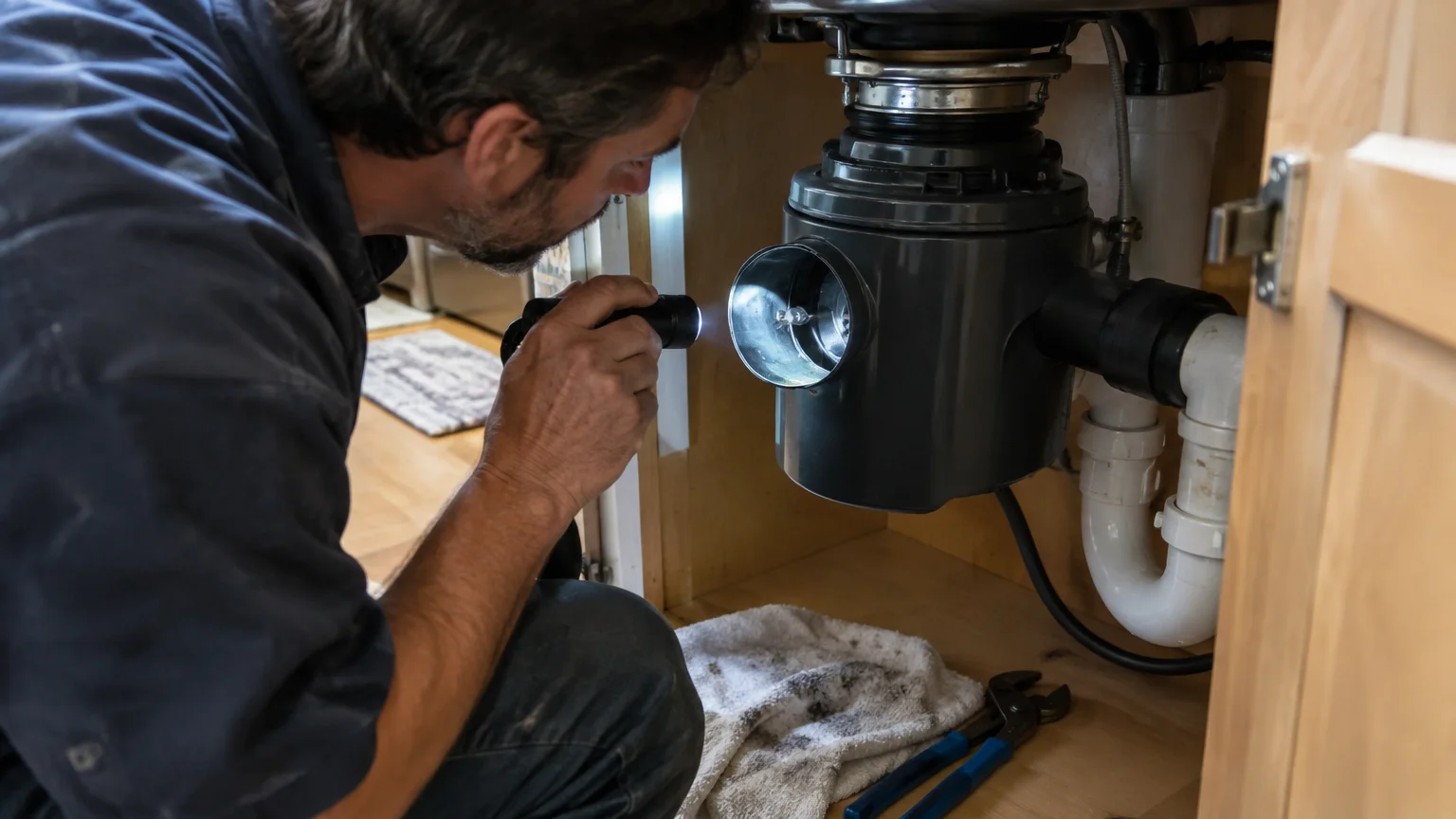
Clear the cabinet so you can see the underside. Use a flashlight to look for the reset button, a tool socket, or a leak. Keep the disposal off while you check. If you see damaged wires, water near the outlet, or a cracked body, stop and call a professional.
What should stay out of the chamber?
Keep hands, fingers, spoons, and other tools out of the grinding chamber. Do not use a knife, screwdriver, or metal hook to reach a stuck item. They can slip, harm parts, or cause injury. If an item is visible from above, leave it until power is safely cut and the maker’s instructions explain what to do.
A safe check follows only the steps allowed by the instructions. Look for clear damage, note the model, and check whether you can reach the power source without touching wet or damaged parts. Do not take the disposal apart to look for a jam. Repairs inside the housing can expose sharp parts and electrical risks.
If there is a sink leak or blocked drain, describe those signs too. A plumber may need to check the disposal and nearby Kitchen Plumbing. Explain whether the unit hums, clicks, or stays silent after you press the switch. Clear details can help guide the next safe step.
How can you safely free a jammed garbage disposal?
Try to free a jam only if the maker’s instructions allow it and power is safely cut. Use the correct disposal wrench or hex key if the unit has a matching socket. Never reach inside the chamber. If the tool will not turn with gentle pressure, stop and arrange a professional check.
How do you use the maker’s wrench?
With power off, place the correct wrench in the socket beneath the disposal. Follow the maker’s directions to move the grinding plate back and forth. Use steady, light pressure. Do not force the tool, add an extension, or use another tool to make it turn.
If the plate moves, remove the wrench before restoring power. Look into the chamber with a flashlight, but keep your hands and tools out. Remove a visible item only in the way the instructions allow. If you cannot remove it safely, leave it for a plumber.
How do you check for an obstruction?
A flashlight may show a hard object near the top of the chamber. Do not put your fingers into the opening, even if the item looks easy to reach. Do not pour chemical drain cleaner into the disposal. Chemicals can splash or harm parts, and they will not free a stuck grinding plate.
After clearing a jam, follow the manual before reconnecting power. Run water only if the maker recommends it for a test. Stand clear of the opening and switch the unit on briefly. If it hums again, switch it off at once. Do not test it several times in a row.
Some jams return because the disposal is worn or an object remains trapped. A disposal that will not turn with gentle wrench pressure needs a closer look. Taking it apart to repair it is not a safe homeowner task. Leave repairs inside the unit to a qualified professional.
How do you reset a garbage disposal that still will not spin?
Use the reset only after clearing the jam and letting the unit cool as the maker directs. The reset button is an overload protector, which cuts power when the motor gets too hot. It does not remove a jam or fix a broken motor. If the unit hums again, turn it off.
When should you press the reset button?
Find the button by using the manual or label on the disposal. Make sure the wall switch is off. Press the button only as the instructions say, and do not force it. If it will not stay in or the breaker trips, stop. The unit may still be jammed or have an electrical fault.
Do not reset the disposal again and again to make it run. Repeated trips point to a problem that needs care. A motor that got too hot may need time to cool, but a reset will not help if the grinding plate remains stuck. Follow the maker’s advice instead of guessing how long to wait.
How can you test it safely?
Once the instructions say it is safe, remove any wrench and make sure the chamber is clear without reaching inside. Restore power only if the plug, wires, and area are dry and undamaged. Run water if the manual calls for it, then switch the disposal on briefly while standing clear.
A disposal that runs smoothly may be ready for normal use. Stop it if you hear a hum, grinding noise, or repeated clicking. Also stop if water leaks beneath the sink or the breaker trips. Do not keep restarting it to see if the problem goes away.
If the unit stays silent after a reset, that does not prove it is safe or fixed. A loose connection, failed switch, or damaged motor can also stop it from running. Do not open the electrical parts yourself. A plumber or electrician can check the issue and advise whether repair or replacement is safer.
When should you call a plumber or electrician?
Call a professional if the disposal still hums after safe checks, the jam will not move gently, or the reset keeps tripping. Get help for leaks, burning smells, damaged wires, smoke, or a breaker that trips again. Do not open the unit or touch exposed electrical parts.
What signs point to a larger problem?
A failed motor may hum without turning or make a hot, burning smell. A wiring issue may trip the breaker or make the unit act in an unsafe way. A disposal that leaks from its body may have a damaged seal or housing. These are not simple cleaning or reset tasks.
Jams that keep returning can point to worn parts, a damaged grinding plate, or items that should not go into the unit. If the disposal makes a loud metal sound, stop it. A plumber can check the unit and nearby drain connections. An electrician may be needed for a problem with the switch, outlet, or wires.
What might a professional inspect?
A professional may check the power supply, switch, reset, motor, grinding parts, and drain connection. They can look for a jam without asking you to reach inside. If the unit is damaged or worn, they can explain whether repair or sink disposal installation makes more sense.
The right fix depends on the unit, the cause, and the nearby pipes. A new installation may be needed if the existing disposal cannot be repaired safely. A plumber can also check for leaks that may harm the cabinet or sink. Share the steps you tried, including whether the reset button stayed in.
For Chino Valley homes and rental properties, Chino Valley Plumbing can assess disposal problems and related plumbing concerns. Tenants should tell the property owner about a leak or electrical concern promptly. Do not use a unit that hums or smells hot while waiting for help.
How can you prevent a garbage disposal from humming and jamming?
Use the disposal only for food scraps its maker says are safe. Run it as directed, keep hard objects out, and stop if it makes an odd sound. Regular care can lower the chance of a jam, but it cannot prevent every failure.
What should not go down the disposal?
Avoid putting items in the disposal if the manual warns against them. Hard pits, bones, utensils, and other objects can stop the grinding plate. Fibrous scraps and large amounts of food may also cause trouble in some units. When unsure, put scraps in the trash or compost instead.
Feed suitable scraps in small amounts and follow the maker’s advice about water. Do not pour cooking grease into the sink, since it can harden in pipes. Avoid harsh chemicals unless a professional or the maker says they are safe for your system. A clog may need Drain Cleaning rather than repeated disposal use. In Chino Valley, slow drains may need attention beyond the disposal.
What routine care helps?
Keep the area under the sink dry and clear enough to spot a leak. Check for new drips, odd sounds, slow drains, or a change in how the unit runs. Follow the care steps in the manual; different models may need different care. Do not take the disposal apart for routine cleaning.
If the disposal jams often, note what went into it and when the issue began. This can help find a pattern, such as hard scraps or a drain blockage. Stop using the unit when it hums, leaks, or trips the breaker. Early care may help prevent harm to the disposal and cabinet.
Key takeaways
- A hum often means the motor has power but cannot turn.
- Switch the disposal off promptly; never put a hand inside.
- Use only the maker’s tool and instructions to clear a jam.
- Reset the unit only after the jam is cleared and it is safe.
- Call a professional for repeated trouble, leaks, heat, or electrical signs.
A humming disposal may have a simple jam, but repeated starts can make the problem worse. Safe checks are limited to the steps allowed by the maker. If the unit stays stuck or shows signs of damage, stop and get qualified help. Contact us to have a plumber inspect a disposal that still hums, will not spin, or appears unsafe.
Frequently Asked Questions
Can a humming garbage disposal cause damage?
Yes. A motor that keeps trying to turn while the plate is stuck can overheat or suffer damage. Switch the unit off as soon as it hums. Do not keep pressing the switch or resetting it again and again. If the sound returns after a safe check, leave the disposal off and call a professional.
Can a homeowner repair a garbage disposal?
A homeowner may safely check the manual, switch the unit off, and use its maker-approved wrench if power is cut as directed. Never reach into the chamber or open electrical parts. If the jam will not move gently, the reset keeps tripping, or there is a leak, call a professional.
How do you repair a garbage disposal that is jammed?
Start by turning it off and following the maker’s directions to cut power. If the unit has a matching wrench socket, use the correct tool gently. Do not force it or reach inside. If the grinding plate stays stuck, stop and arrange a professional check instead of taking the unit apart.
Should a disposal be replaced if it keeps jamming?
Not always. A jam may come from an item that should not have gone into the unit, but repeated jams can point to worn or damaged parts. A professional can check the motor, grinding plate, and drain connection. Repair or replacement depends on the unit’s condition and the cause.
Is sink disposal installation needed when a motor fails?
Not in every case. Some units can be repaired, while a badly damaged or worn unit may need replacement. A plumber can inspect the disposal, its electrical connection, and the sink drain before advising on installation. Do not install or wire a replacement unless you can do so safely and correctly.
If you are unsure what is wrong, having a professional check it can help you choose a safe next step. Chino Valley Plumbing serves homeowners and property owners. Contact us to discuss a disposal that will not spin.