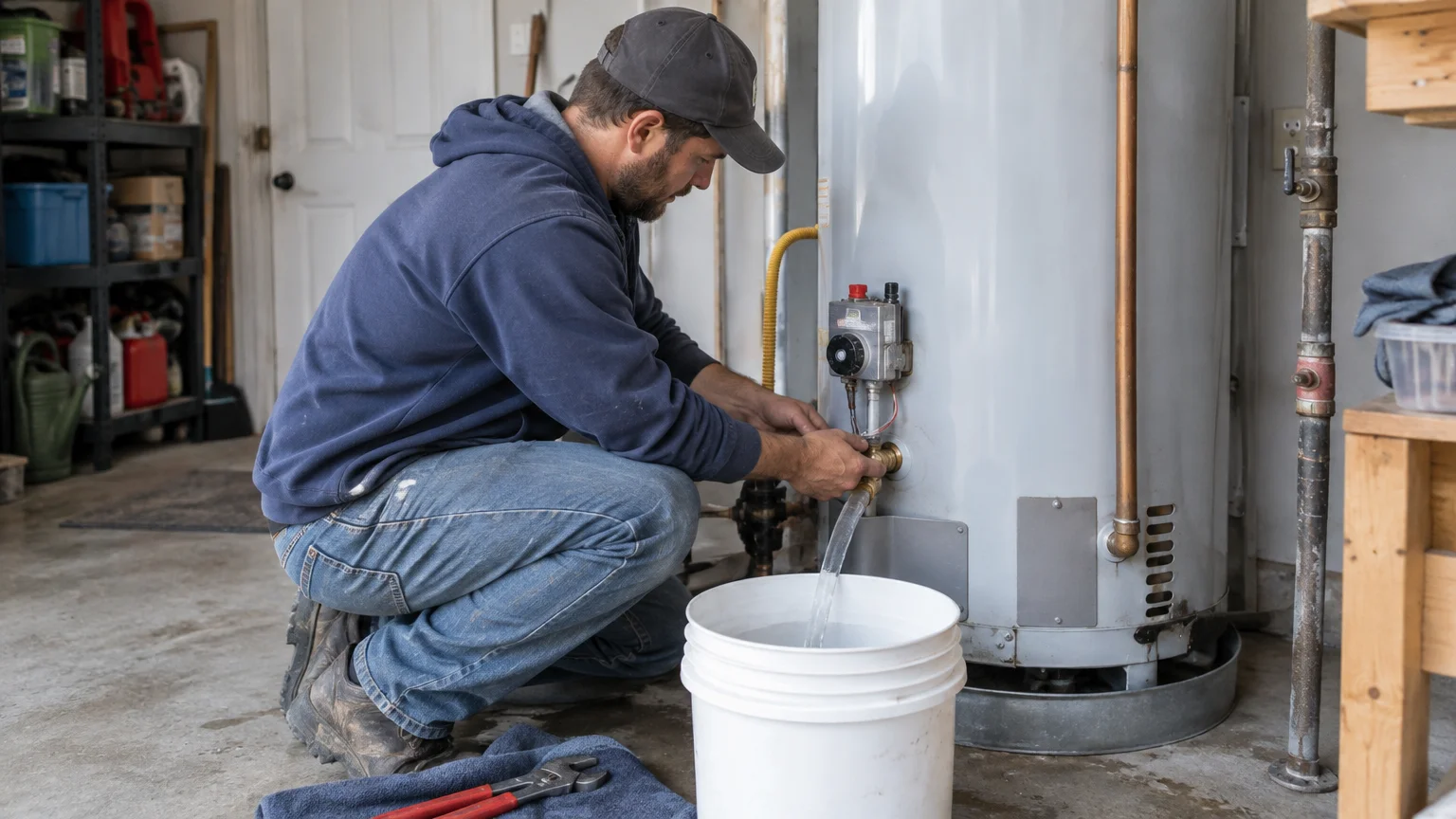
Most tank water heaters should be flushed about once a year. The best schedule depends on hard water, household use, and the tank’s condition. Knowing how often to flush a water heater can help limit sediment, protect heating parts, and find leaks before they cause major damage.
A water heater may work well for years, then start making popping sounds or provide less hot water. Sediment often causes these changes. Chino Valley Plumbing helps homeowners and property owners decide when routine care, water heater repair, or water heater replacement may fit the unit.
How often should you flush a water heater?
Most makers suggest flushing a tank water heater once each year. This removes loose minerals and dirt from the bottom of the tank. A home with hard water may need service more often than a home with cleaner water.
The right timing also depends on how much hot water the home uses. A large family, busy rental home, or small business may place more demand on the heater. Heavy use sends more water through the tank and can leave more sediment over time.
Why manufacturers commonly recommend annual flushing
Sediment is material that settles out of water. It can include minerals, sand, and other small bits. A thick layer may sit between the burner or heating element and the water. This makes the heater work harder to heat the same amount of water.
Annual flushing gives a plumber or trained property owner a chance to remove loose buildup. It also allows a check of the drain valve, pressure relief valve, connections, and anode rod. An anode rod is a metal part that helps protect the tank from rust. Anode rod replacement may help protect a tank when the rod is badly worn.
How water quality and household usage affect timing
Hard water can leave scale inside the heater more quickly. Scale is a hard mineral coat that sticks to heating parts and pipes. A home with cloudy water, repeated sediment, or heating issues may need a schedule based on its own conditions.
Tenants and property owners should report changes early. A heater that runs out of hot water quickly, leaks, or makes loud sounds needs attention even if its next flush is not due. In Chino Valley, water conditions and building use can both affect the right plan.
What happens if you do not flush your water heater?
Skipping care lets sediment collect at the bottom of the tank. The heater may then warm water less evenly, make more noise, and take longer to recover after heavy use. In serious cases, buildup can reduce the space available for hot water and strain the heating parts.
Sediment does not always mean the water heater needs replacement. A trained plumber can inspect the unit and decide whether flushing, water heater repair, or another service makes sense. The tank’s condition matters more than one missed visit.
How sediment affects heating performance and capacity
A thick sediment layer can act like a barrier between the water and the heat source. Gas units may need to run the burner longer. Electric units may place extra stress on their heating elements. Both types may use more energy while making less useful hot water.
Sediment can also move through the tank during use. It may clog a valve or collect in a faucet aerator. If hot water looks cloudy, flow is weak, or the tank makes repeated rumbling sounds, the heater needs a closer look.
What warning signs mean a water heater needs attention?
A water heater should be checked when its sound, temperature, or daily operation changes. Watch for these signs:
- Water around the tank, drain valve, or nearby connections
- Rust-colored hot water from more than one fixture
- Popping, banging, rumbling, or cracking sounds while heating
- Hot water that runs out much sooner than before
- Water temperature that changes without moving the tap
- A pilot light that will not stay lit on a gas unit
A leaking tank is not the same as a leaking connection. A loose fitting or valve may be repairable. Rust through the tank often points to replacement. Emergency Plumbing may be needed if water is spreading, the unit is unsafe, or the home lacks dependable hot water.
How do you flush a tank water heater safely?
A normal flush starts by stopping the heat source. Next, connect a safe drain hose and direct the water to an approved drain area. The steps vary between gas and electric units. Anyone working near hot water, gas, electricity, or a pressure valve must follow the maker’s directions.
What are the main steps in a routine flush?
A basic flush usually follows this order:
- Turn off the gas control or electrical power.
- Let the water cool before opening the drain.
- Close the cold-water supply valve above the tank.
- Connect a hose to the drain valve and place its end safely.
- Open a hot-water tap to help release pressure.
- Open the drain valve and let the tank empty.
- Briefly open the cold-water supply to loosen leftover sediment.
- Close the drain, refill the tank, and restore power or gas only when full.
Water from the hose may be hot and may contain sharp mineral pieces. A drain that cannot handle the flow may overflow and harm floors or walls. An electric heater must be full before power returns, or its heating elements may fail.
When should a professional plumber handle flushing?
A homeowner can inspect the area, look for visible leaks, and read the owner’s manual. Simple care also includes keeping stored items away from the heater. Watching for changes in sound and temperature can help find trouble early.
Homeowners should not work on gas controls, electrical wiring, damaged valves, or a leaking tank without proper training. If a person smells rotten eggs, hears hissing near a gas appliance, or suspects a gas leak, they should leave and contact the gas utility or emergency services from a safe place. They should never test a suspected leak with a flame.
A plumber for water heater can check stubborn sediment, failed valves, unsafe venting, leaks, and tankless systems. Tankless units do not flush like storage tanks. They often need a maker-approved descaling process instead.
Should you flush or replace your water heater?
Flushing is often the first choice when the tank has no serious leak and still supplies steady hot water. Repair may help when the issue involves a valve, heating element, thermostat, pilot part, or connection. An inspection can separate a small repair from tank failure.
When is maintenance or repair the better choice?
Maintenance or repair may suit a unit that still heats water but has mild noise, lower output, or visible buildup. The choice also depends on access, part condition, tank rust, and the owner’s plans. Regular care may help a sound heater remain useful for years, but flushing cannot repair a tank that has rusted through.
Tankless systems may need cleaning, filter care, flow checks, or sensor repair. Tankless water heater installation may be an option during a planned upgrade. The home must have suitable gas, electrical, venting, and water connections. Water Heater Installation should also match the building’s demand and local safety rules.
When do age, damage, or efficiency concerns point to replacement?
Replacement becomes more likely when the tank leaks from its body, shows broad corrosion, or needs repeated major repairs. It may also make sense when the system cannot meet the property’s hot-water needs. Consider household size, fixture use, available space, fuel type, venting, and future plans.
A new tank model offers familiar storage and steady hot water. A tankless hot water heater installation supplies hot water on demand, but it may require changes to fuel supply, wiring, venting, or water flow. Chino Valley Plumbing can help Chino Valley homeowners compare these choices without assuming one system fits every property.
Key takeaways
- Most tank water heaters need flushing about once each year.
- Hard water and heavy use may call for a different schedule.
- Sediment can cause noise, slow heating, and less hot-water capacity.
- Homeowners can handle simple checks, but gas, electrical, and leak work needs care.
- A leaking or badly corroded tank often needs replacement instead of flushing.
Frequently Asked Questions
Can a water heater be flushed too often?
Routine flushing is usually safe when it follows the maker’s directions. However, opening an old or damaged drain valve may reveal a problem or cause a leak. A plumber should check a tank with heavy corrosion, a stuck valve, or a history of leaks before routine flushing.
Does flushing fix a water heater that makes popping sounds?
Flushing may reduce popping or rumbling when loose sediment causes the noise. It may not fix a damaged heating element, burner issue, pressure problem, or failing tank. Ongoing sounds, weak hot water, or leaks call for an inspection instead of repeated flushing alone.
Should a tankless water heater be flushed?
Yes, tankless systems may need periodic descaling to remove mineral deposits from the heat exchanger. This process differs from flushing a storage tank and should follow the maker’s directions. Water quality, flow, and use affect the timing. A trained plumber can service the unit safely.
What should a homeowner do when there is no hot water?
The homeowner can check whether the unit has power, whether a gas appliance shows a normal pilot status, and whether a breaker has tripped. Do not open gas controls or electrical panels without training. If simple checks do not help, Water Heater Repair can help find the cause.
Conclusion
Knowing how often to flush a water heater can help protect hot-water service and find problems early. Annual care is a useful starting point, but water quality, use, unit type, and warning signs may change the schedule. Flushing can help when the tank is sound, while leaks and serious corrosion often call for replacement.
If you are not sure what you are dealing with, it is worth having someone look at it before it turns into a bigger job. Get in touch with Chino Valley Plumbing today and we will tell you where you stand.